Notes on the Work
June 2006, Hull, in the north of England.
In Andrew Chalk’s studio—its floor, walls and ceiling all of wood, resonating with a gentle natural warmth—three musicians quietly picked up their instruments, without any predetermined plan.
In the soft, relaxed atmosphere, the music began to flow in step with the pace of their breathing and the subtle shifts in air density and humidity. Over time, the session gradually took shape.
Since the late 1980s, Chalk has produced works defined by a singular stillness and depth. Many ambient musicians have acknowledged his influence, yet his sound—changing like the unfolding of weather while maintaining a delicate transparency and overlapping tonal strata—remains entirely his own.
Jonathan Coleclough, a pioneer of electronic drone music, reduces sonic material into abstract resonances that explore the grain and texture of environments and spaces.
Hitoshi Kojo has created recordings and installations that gently traverse the boundaries between environmental sounds, found-object sounds, and instruments, weaving together performance and editing.
Yet the music played in this studio resembled none of their solo works. Chalk’s strings retained a raw, almost tactile wavering, receiving the resonance of the wood directly rather than dissolving into the abstract sound-images of his usual interplay between performance and effects. Coleclough, understated yet present, formed a layer that subtly altered the density of the air. Kojo, centring his interplay with Chalk’s strings, folded in at times grainy fluctuations and tensions between differing overtones, shaping resonances that responded to the session as a whole.
As a result, the work captures music that belongs to none of the three alone. Even so, the climates and sensibilities embedded within the three musicians remain, their differing humidities and perspectives overlapping in the same sonic field. In pieces guided by an East Asian sense of time-interval, there is a wavering that could not have arisen from British performers alone; conversely, in sustained tones where grey skies and light seem to dissolve into one another, a colouration emerges that Japanese musicians alone would not have produced. When melodies appear, British and Japanese elements blend naturally, giving rise to the sound of a fictional folk song, unrecognisable as belonging to any particular country or era.
Each track on the album carries a name associated with “rain”. Both Japan and the north of England possess richly nuanced vocabularies for describing subtle varieties of rainfall. As the recording took place in June—Japan’s rainy season—the unit name Minazuki (the traditional Japanese name for the sixth month of the lunar calendar) resonates gently with the seasonal atmosphere.
This album is drawn from an extended studio session in 2006. It was later shaped through editing and a modest amount of additional recording in Switzerland in 2009, and revisited in 2025 in Belgium for further editing and mastering. Three locations, and a long span of years, settle into the music as layers that accumulate within a single whole, each with differing degrees of transparency.
From Dust to Stars is a rare work in which each artist’s “local sensibility” coexists with an abstraction that transcends place and era. Their individual characteristics remain in a fine-grained state—coexisting before fully merging—and the music rises like a slow-moving weather system. It is neither imitation nor a compromise between three styles, but the document of a nameless music that appears only when place, people and time align in unison.
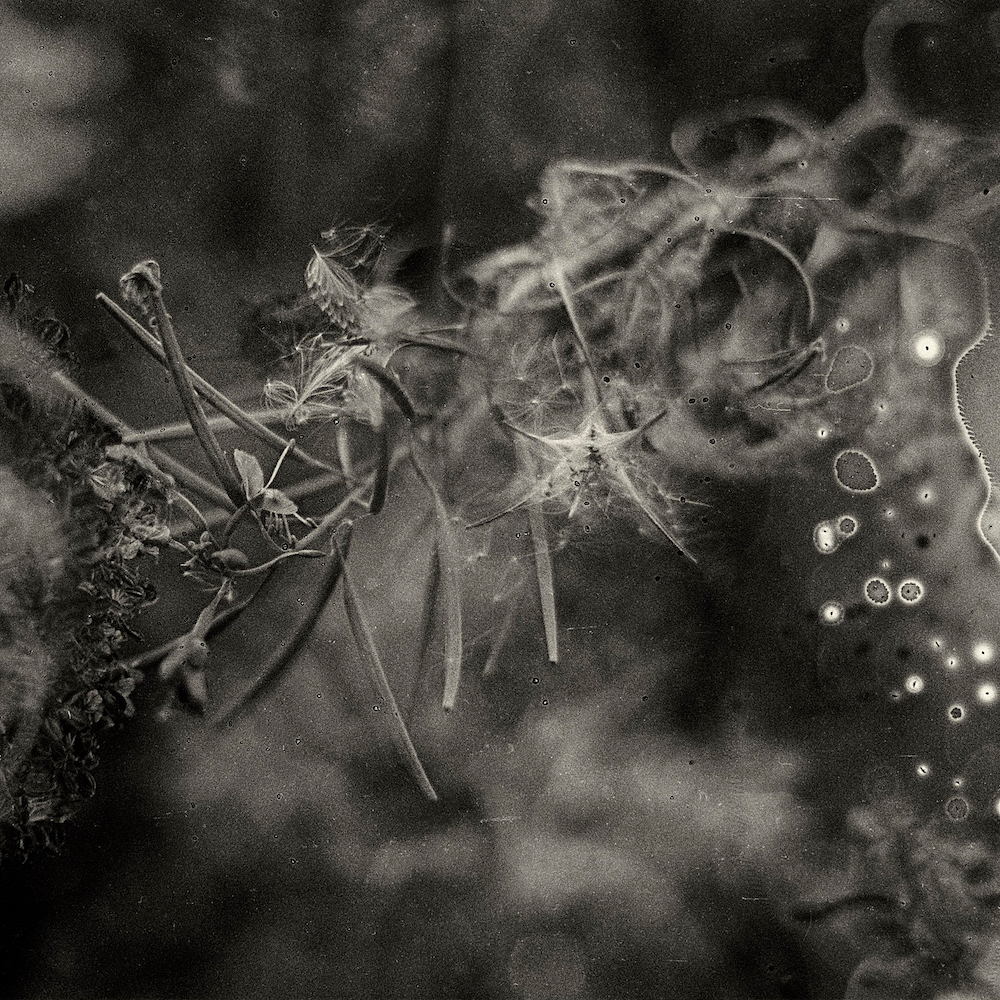
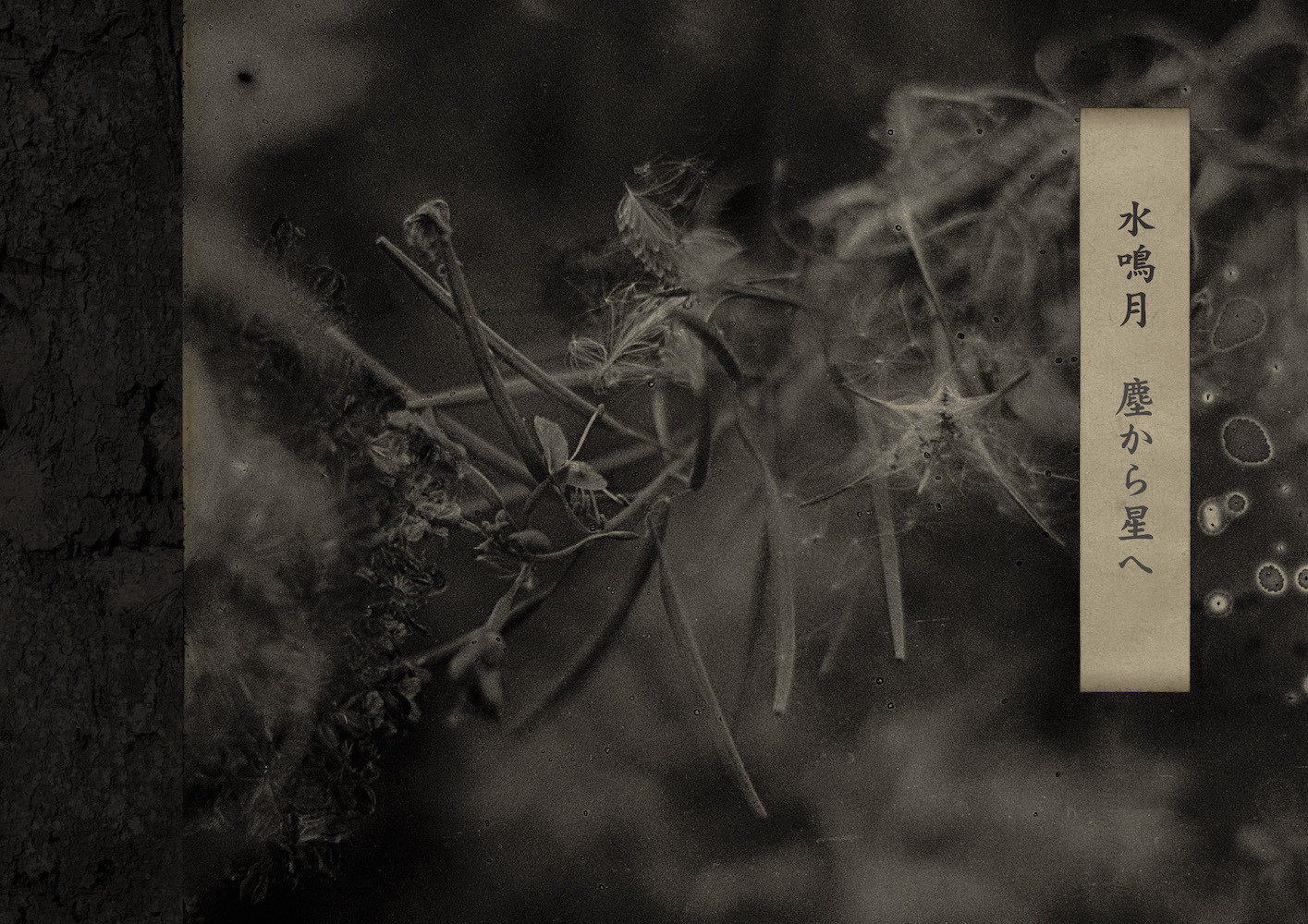
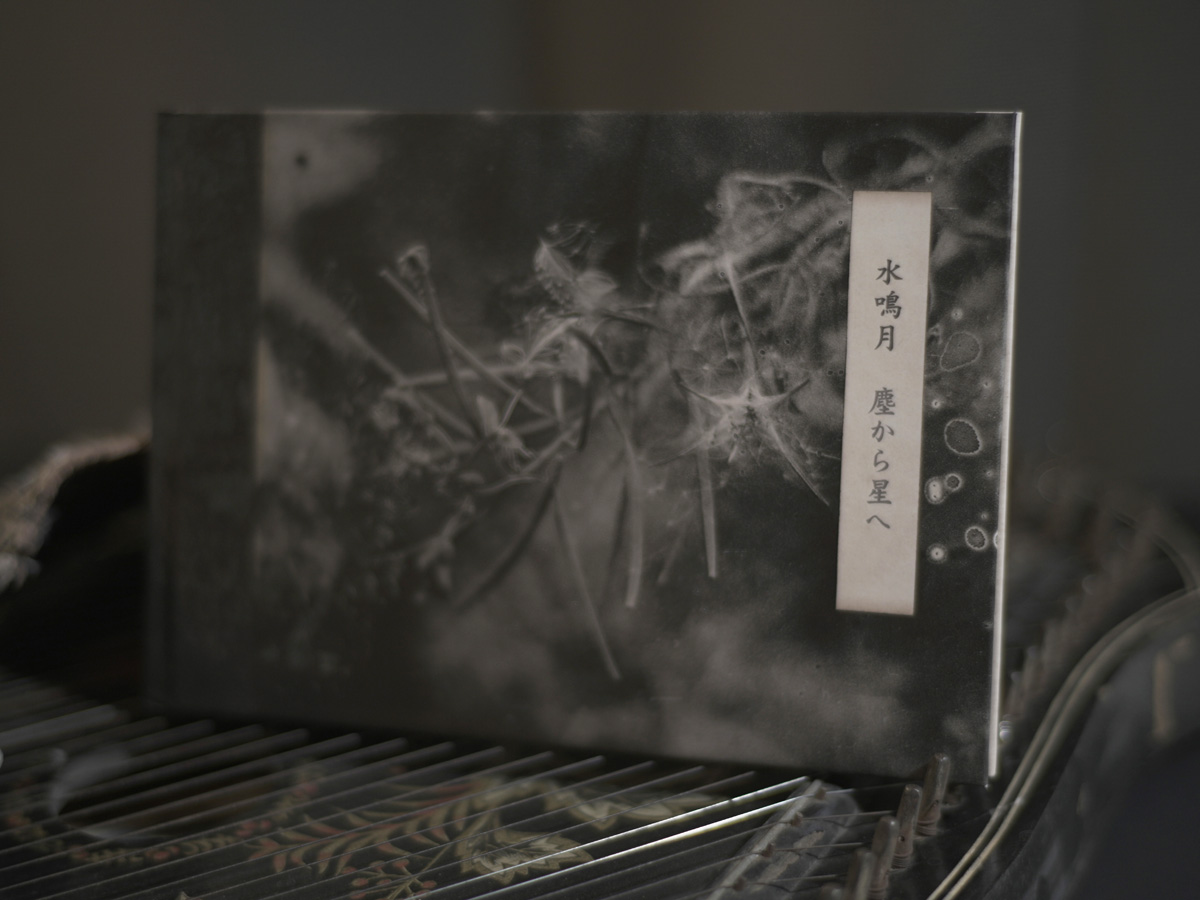
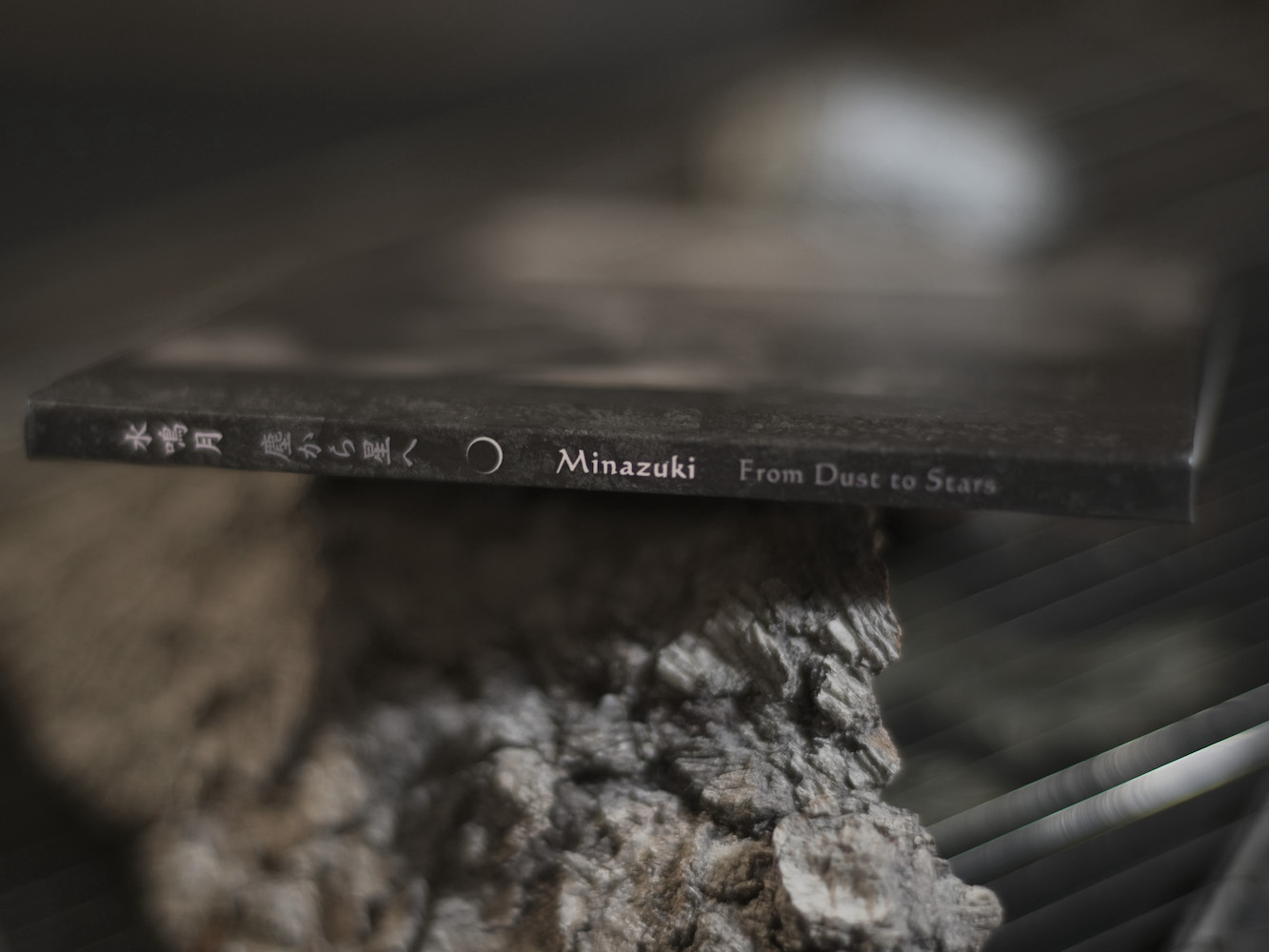
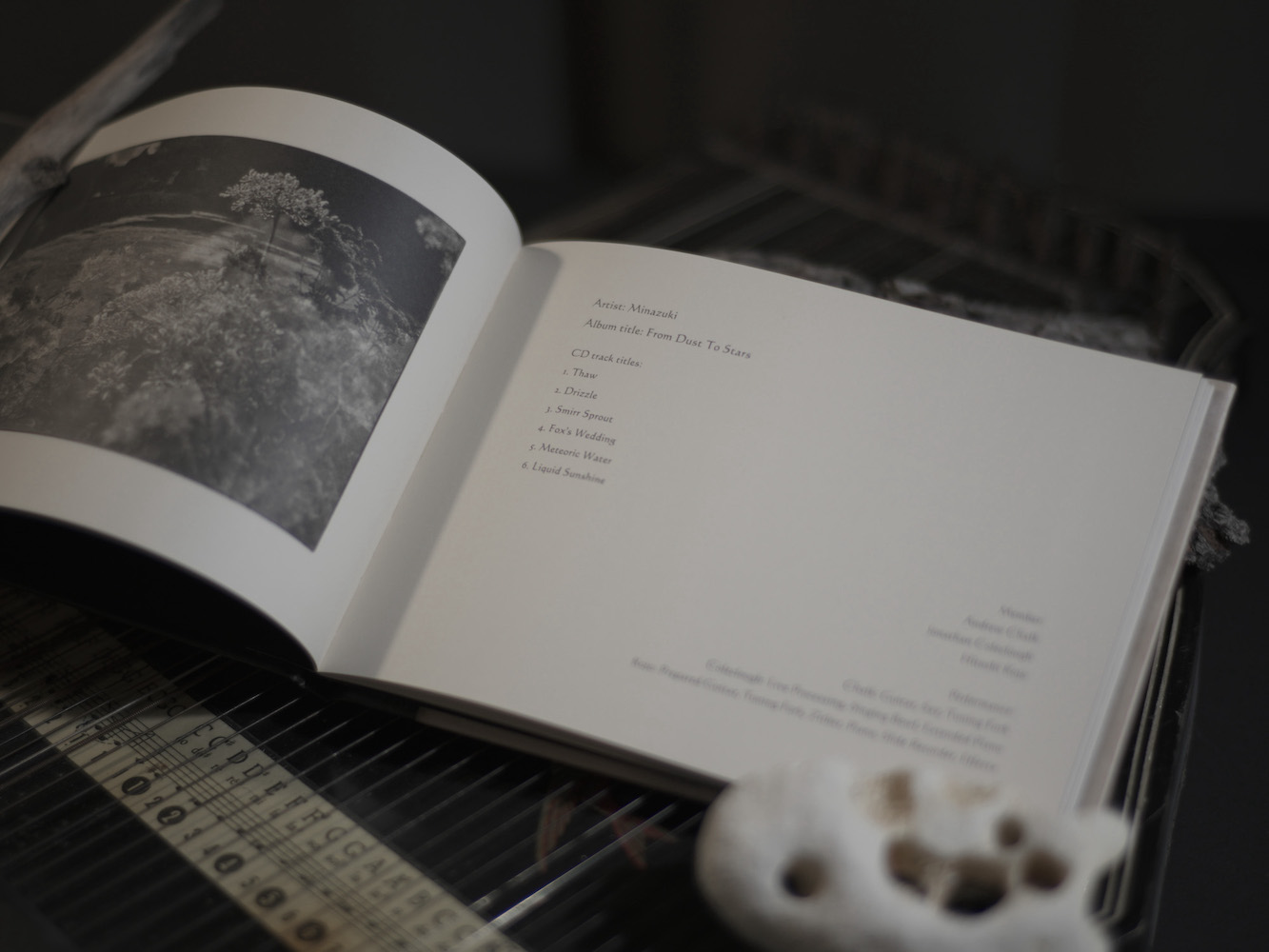
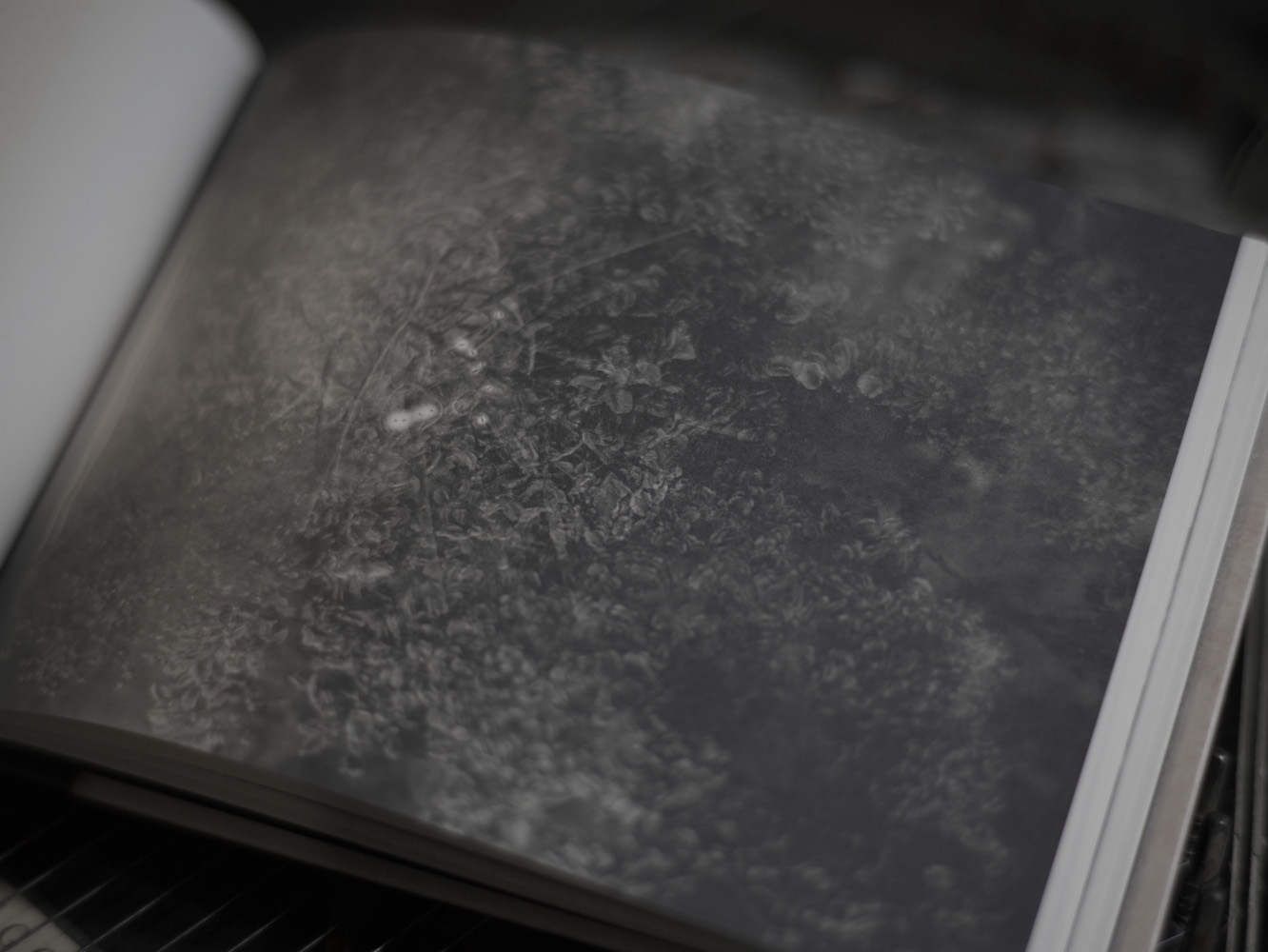
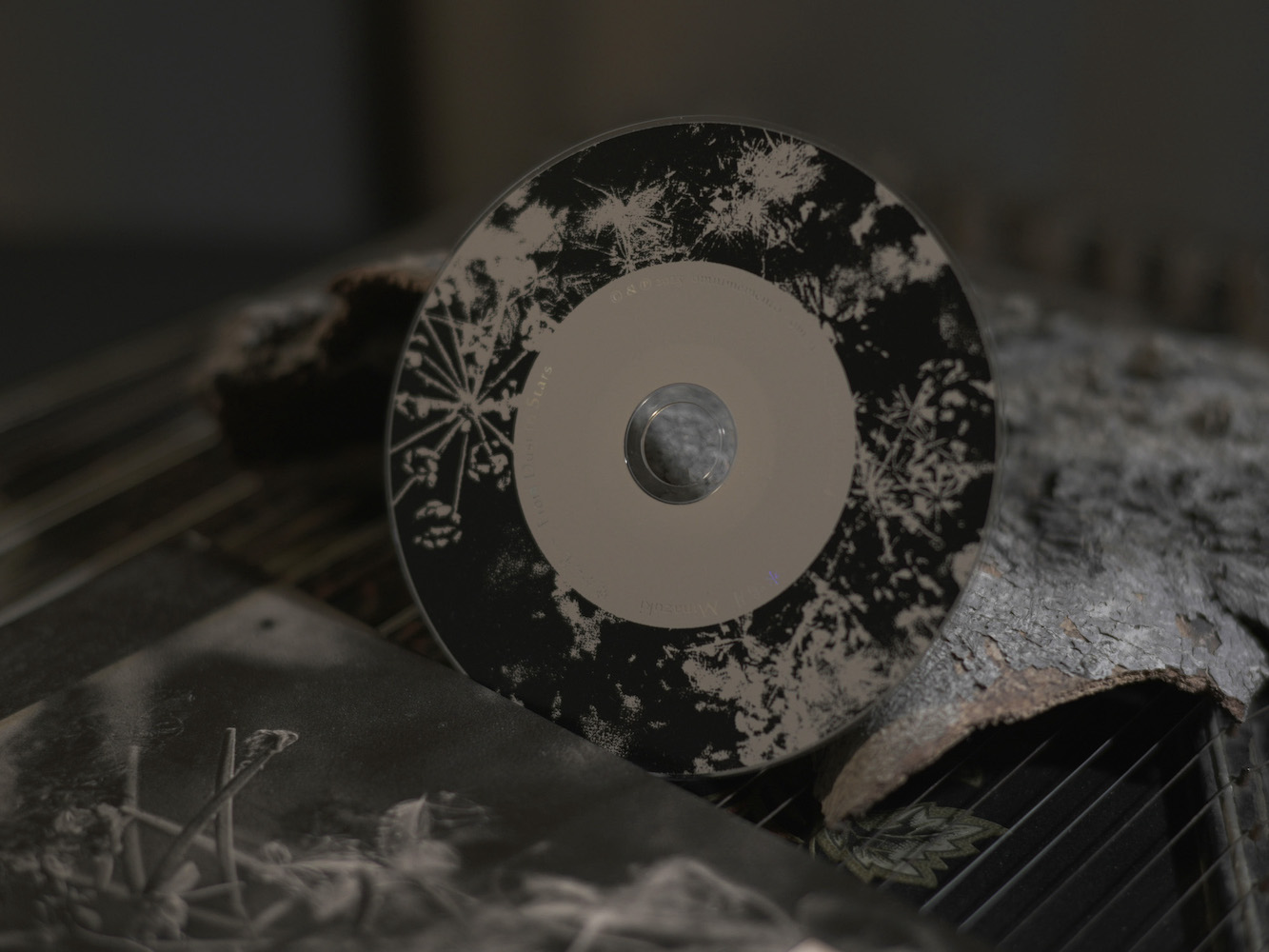
The CD is released together with a 28-page photobook by Kojo. The photographs, made using pre-treated black-and-white film and multiple exposures within the camera, layer plants, forest landscapes, film grain, melted emulsion, and include dust adhering to the film. Images emerge as if several moments have settled onto a single surface, echoing the “layers” and “after-resonances” present in the music, and evoking the quiet tremor of memory’s shifting surface.
A set of toned cyanotype prints under the same title is released simultaneously. From the twenty images included in the photobook, eight were selected and printed by Kojo, using hand-applied sensitiser, exposure, bleaching, and catechin toning. The reactions of light, water, paper, temperature and time are fixed in each print, giving each its own depth and texture. The hardback portfolio is covered in Japanese washi paper and handmade entirely by Kojo. Sound and light—and the traces they leave—gently reveal the quiet connection between things born far apart.
Hitoshi Kojo, Brussels, November 2025
|